
A revolution in the country’s oil and gas industry;
Integrated construction of gas compressor parts with 3D printing technology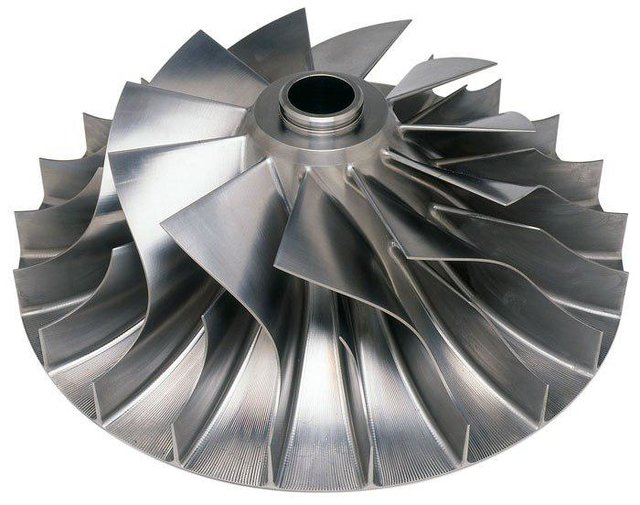
Researchers at the university have succeeded in gaining technical knowledge to design and integrate integrated gas compressor components in the oil and gas industry using 3D printing technology.
Gholamreza Fayyaz, the project manager, in an interview with ISNA, defined a three-dimensional print in the field of metal parts or incremental manufacturing, production of metal parts for special applications and on demand (Print on Demand) and said: Fourth, extensive research began at the university about eight years ago.
He said the group’s research activities report was published in the prestigious journal Additive Manufacturing, adding three-dimensional printing applications to metal parts, including integrated components of gas compressors and the turbine manufacturing industry, adding that the compressor and turbine manufacturing industry included There are industries whose manufacturing technology is only available to large global companies.
Regarding the gas compressors, the faculty member said: “These compressors are one of the most sophisticated equipment needed by industries, especially the oil industry, and are also used in the gas and petrochemical industries.”
Referring to the transfer of gas to homes through a compressor, he said that the blades of this part have one of the most complex construction methods and pointed out: these blades must be made in one piece.
He said that some people have already provided patents for the construction of a gas compressor unit, adding that it is very difficult to make compressor blades as separate parts and connect them to each other by welding; this is because welding It causes them to deform.
A member of the faculty of Tafresh University stated that the reason for making the compressor problem in separate parts is the speed of movement of these blades with high speed and added: “According to this, the incremental construction method is one of the best ways to make gas compressor blades.”
He then went on to explain three-dimensional printing: The most important feature of this type of printing is its incremental nature, or the shaping of parts. An example of this is decorating a cake with pastry cream.
He went on to say that incremental construction is the basic idea of three-dimensional printing: “In this type of construction, the object is made by ‘adding layers’, just as the same technique is used to make or decorate a cake.”
The faculty member of the university stated: In this technique, we first make the object, which consists of its constituent material, into a fluid or liquid, and then we form it.
He described the laser as the heat source for lubricating the part and stressed: “Lasers are very accurate.”
He pointed out that in the construction of jet turbine blades or gas compressor impellers, the metal powder made of these blades is melted and formed with the help of a heat source (laser).
The faculty member of the university stated that the desired part will be cold and dry after forming, adding: At this stage, the so-called solidification or solidification occurs.
He pointed out: “Since the technique is done robotically (by a robot) and with a CNC machine, the shape of the resulting piece is similar to the shape of a turbine blade.”
He considered the production of metal parts, especially for special applications based on demand (POD), to be derived from the printing and publishing industry, and explained: “In the digital printing industry, the possibility of printing and publishing based on demand has been achieved.” In the oil and gas industry, however, it is common for parts to be purchased and stored in warehouses; with the help of the 3D printing industry, the required metal parts can be made on demand.
The faculty member said that if this is achieved, the issue of warehousing related to the maintenance of industrial parts and equipment will be completely eliminated. He announced the operation of the first car made by three-dimensional printing technique in 2025 and added: : General Electric now has a 3D printing of the jet engine.
Fayyaz referred the issue to the World Economic Forum’s published research and said: “According to this study, 84.1% of the 800 technology experts believe that the 3D printing of a complete car will be realized by 2025.” However, 81.1% of these experts believe that by 2025, 5% 3D printing of all consumer products in the world will be achieved.
He added: “By 2025, 10 percent of people’s clothing will be connected to the Internet, and even today, hours connected to the Internet have become widespread.”
A faculty member at the University of Technology described cladding technology as the basis for the incremental construction and 3D printing of sensitive parts. The diameter of the laser, the material of the part, etc. are important, and in such a case, the construction of the part will be done without any problems.
Announcing that the research work done at Tafresh University has been completed and that it needs to reach the operational stage, he stressed the need to invest in the facilities and equipment needed in the industry, noting that a factory cannot be built at the university.
Noting that the project has not yet been patented, but has been published in the form of a report in the prestigious journal “Incremental Construction”, the next step of the researchers is to register patents and added: The present project is ready for operation in the oil industry. .
The faculty member of the university considered metal hardening to be needed by industries and explained in this regard: